Gothenburg sound


I’ve been experimenting with Talking Labels.  For the NNDR poster I used a label to supply a 60 second overview (linked to below) with the intention of summarising my poster for delegates with print impairments when I wasn’t present(ing). Listen here if you like:

http://sarahlewthwaite.typepad.com/poster/nndr_label.WMA

The device was practical when I wasn’t there and, if I was already presenting, when print impaired people joined the group; delegates could then get an overview without relying on an assistant’s interpretation of the poster. Tips for use:

  • Initially I put the label at the top left, thinking this would be prominent, however positioning the device low on the poster meant it could be reached by all.
  • In the venue (a very large hall previously used for ship-building) the sound was not strong. As a result, I would recommend advertising it as a detachable device (use Velcro) that can be held to the ear.

The big issue is keeping the label prominent – I’m not sure I succeeded here.  However, the response from those who did use the label was very positive.

Gothenburg Pictures


To view a photo stream from the Gothenburg conference just click on one of the images below.

www.flickr.com

Gothenburg, Sweden


The view from the ferry port – more images available on Flickr – I’ll add a badge or feed here shortly…

Ferry_stop_3

NNDR Poster Competition


I’ve just returned from the Nordic Network on Disability Research biannual conference in Gothenburg, Sweden, where my poster won the Studentlitteratur poster competition (hurray!).  I’ve uploaded two versions here, a PDF copy of the poster and a Word text version.  Photos of the poster in-situ to follow…

NNDR Poster PDF version: Download nndr.pdf

NNDR Poster Word file (text only): Download nndr.doc

Poster Printing


Based in Nottingham? I’d like to recommend John E Wright printers for poster printing, they provide top notch service and 10% student discounts. 

115 Huntingdon Street
Nottingham
NG1 3NF

0115 950 6633

Shock Digest 2


‘Does Web 2.0 Herald the end of in-house development and provision of IT services?‘ Paul Walk, UKOLN.

As previously discussed, the answer to this question is not clear cut. The critical mass of usage (and/or the weight of the Market) appears to demand branded, recognisable web 2.0 products in all things, but whether this is a demand is ergonomic, and within the academic and personal sphere is unclear. Walk cited two students’ assertion of gmail’s prowess in comparison to their own institutions web services at a conference in Edinburgh. During my MA research, students with disabilities expressed similar sentiments, and (albeit good humoured) dismay concerning the learning curve of associated computer services in general. For accessible, searchable, inboxes gmail won out. Walk suggests institutions learning from commercial 2.0 approaches to development and considering some of the benefits, and costs, of institutional use of third party services.

References:

Shock Digest 1


I’ve had a request for a bit more on the Shock of the Social conference in March. Here is the first part of my edited highlights…

Keynote: ‘Social Software and Personal Learning Environments: Do they really fit with Formal Education?’ Dr Terry Anderson, Athabasca University.

I had an inkling that the answer to this question would be ‘yes’ and I wasn’t disappointed. Dr Anderson stated that the affordances of ‘educational semantic web’ encourage participative learning. ‘The decline of the compliant learner’ (Goodyear, 2004) along with Paulsen’s conception of networked learner as negotiating and codetermining educational factors such as time and place, learning tools, content, pace, evaluation and delivery of education (Paulsen, 1993) puts the social web at the heart of e-learning and educational discourse. He describes Social Networking technologies as the ‘elephant at the table’. Furthermore, Anderson outlined Content as necessary, but no longer sufficient to online learning. This is where the strength of the PLE for inculcating ownership (custom control), social presence – arguably the cornerstone for cognitive presence so necessary for deep learning online (my words, not his) – and identity is founded. As such, he set the stage for the day’s ‘social web’ proceedings. ANSWER: Yes!

Further references:

Wisdom is the principal thing; therefore get wisdom


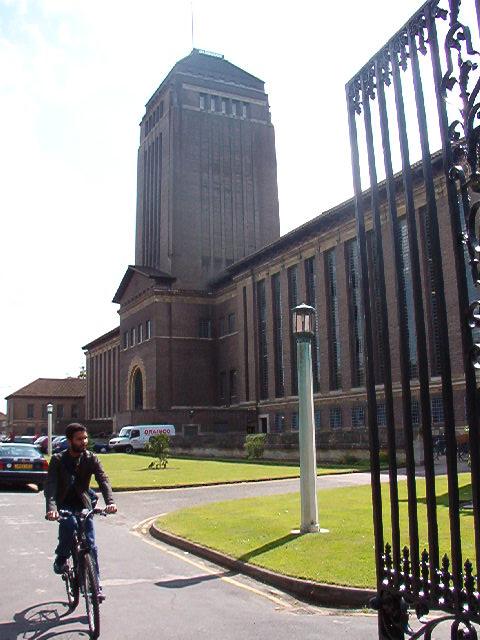
The UL, an imposing red brick building with tower and flanking columned wings.

Earlier today I did a quick round trip to Cambridge University Library to seek out some of the recommended reading for the New Perspectives on Disability Research workshop I’m going to next month.

The UL is a copyright library (akin to Trinity Dublin, the Bodleian and the British Library). In theory everything ever published in the UK should be in there somewhere, so I thought my chances of finding the necessary titles were pretty good. However, the list provided by the organisers includes a few titles that defy this logic, being Scandinavian in origin. More fool me for my international pretentions!

I’ve always liked the library’s Power Station physique, (pictured) and it’s semblance as a power house of learning, ‘Ministry of Love’ (Orwell), ‘Dark Tower’ (CS Lewis) or otherwise. I also enjoyed some of the archaic shelving. The constant waves of new titles have pushed books off the shelves an onto table tops and windowledges in parts of Sociology (South Wing, 6th floor). Day trip asidehere’s what I’ll be reading for the next few weeks.

Newsflash: Pew Report and Tomasello Webcast


Yesterday the people at Pew Internet and American Life project released the final results of their study ‘Teens, Privacy and Social Networks’ examining how teens manage privacy and identity online. For more see the Summary and Final Report.

Today, the Psychology Department at the University of Nottingham has launched a Public Lecture Webcast of Professor Michael Tomasello’s recent lecture on ‘Human adaptation for culture’.  I originally missed this due to the Shock of the Social in March, so this webcast should prove interesting. 

Enhancing Learning; virtual worlds, simulations and games based learning


I’m going to a free Becta Seminar: "Enhancing Learning; virtual worlds, simulations and games based learning" on Tuesday 24th April 2007 at the Institute of Engineering and Technology (IET) in Birmingham.  Places at the seminar are still available, I’ve linked here to the booking information and full programme if you’re interested.